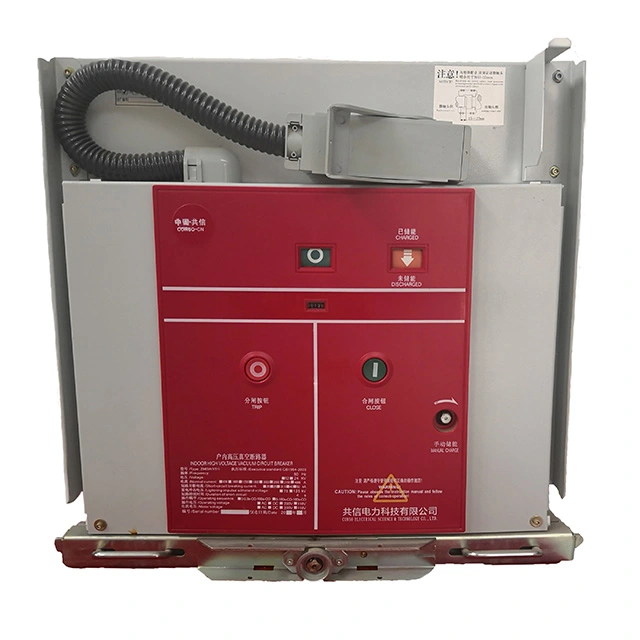
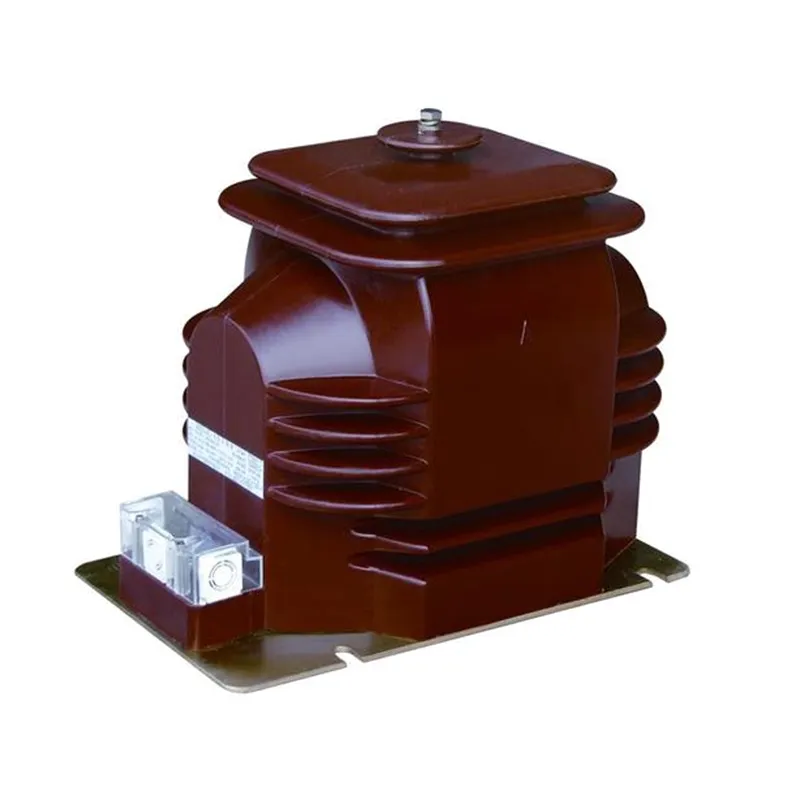
In medium voltage power distribution, a circuit breaker is only as reliable as the parts that move, release, close, trip, and reset at the exact moment protection is needed. The Vacuum Interrupter Operating Mechanism plays that decisive role. It converts stored mechanical or electrical energy into controlled movement, allowing the vacuum interrupter to open or close the circuit quickly and consistently. For buyers, contractors, switchgear builders, and maintenance teams, the real concern is not simply whether the product can operate once. The concern is whether it can operate accurately after years of service, under fault conditions, inside demanding electrical cabinets, and across different project environments.
This article explains how the mechanism works, why it matters, what pain points it solves, and how to evaluate a suitable solution for practical medium voltage applications. It also looks at the manufacturing and selection factors that matter when working with suppliers such as Wenzhou Xifa Electrical Equipment Co., Ltd., a company serving the circuit breaker component market with products designed for power distribution reliability.
Article Summary
A Vacuum Interrupter Operating Mechanism is the motion-control section of a vacuum circuit breaker system. It stores and releases energy so that the interrupter contacts can open or close with proper speed, force, and timing. A well-designed mechanism helps reduce switching failure, improves protection response, supports stable service life, and lowers maintenance pressure for medium voltage systems. Choosing the right mechanism requires attention to rated voltage, breaking requirements, energy storage method, mechanical endurance, installation compatibility, production consistency, and after-sales technical support.
Table of Contents
- Blog Outline
- What Makes This Mechanism So Important?
- How Does the Mechanism Work Inside a Vacuum Circuit Breaker?
- What Buyer Pain Points Does It Solve?
- Which Factors Should Buyers Check Before Purchasing?
- How Do Different Mechanism Types Compare?
- Where Is It Commonly Used?
- How Can Maintenance Teams Extend Service Life?
- Why Does Supplier Capability Matter?
- FAQ
- Conclusion
Blog Outline
- Define the role of a Vacuum Interrupter Operating Mechanism in medium voltage protection.
- Explain the basic working process from energy storage to opening and closing operation.
- Connect product performance with real customer concerns such as safety, downtime, service life, and compatibility.
- Provide a buyer-focused checklist for technical evaluation.
- Compare common operating mechanism options.
- Discuss practical applications in distribution networks, factories, substations, and renewable energy projects.
- Share maintenance points that help keep the mechanism stable over time.
- Answer common purchasing and technical questions.
What Makes This Mechanism So Important?
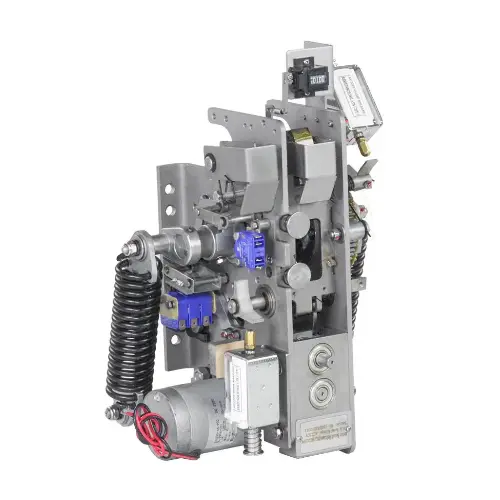
A vacuum interrupter is responsible for arc extinguishing, but it cannot perform that task alone. The contacts inside the interrupter must separate at the right speed, with the right stroke, and under stable mechanical control. That is where the Vacuum Interrupter Operating Mechanism becomes essential.
In real projects, many electrical failures are not dramatic at the beginning. They start as delayed tripping, unstable closing, inconsistent contact pressure, worn linkages, weak spring charging, or poor coordination with protection signals. When these issues are ignored, the result can be overheating, repeated nuisance trips, cabinet damage, production stoppage, or safety risks for operators.
A reliable mechanism helps the breaker respond quickly when protection relays detect short circuits, overloads, or abnormal operating conditions. It also supports regular switching when circuits need to be energized, isolated, or maintained. In short, it is the part that turns protection logic into physical action.
How Does the Mechanism Work Inside a Vacuum Circuit Breaker?
The working principle is straightforward, but the execution must be precise. A Vacuum Interrupter Operating Mechanism normally stores energy through a spring, motor, manual charging handle, or related control assembly. When the breaker receives a closing or tripping command, the stored energy is released through mechanical transmission parts. These parts drive the moving contact of the vacuum interrupter.
During closing, the mechanism pushes the moving contact toward the fixed contact and maintains proper contact pressure. During opening, it separates the contacts quickly enough to allow the vacuum interrupter to extinguish the arc. The faster and more stable this movement is, the better the breaker can control electrical stress during switching.
- Energy storage: The mechanism stores energy before operation, often through a spring charging system.
- Signal response: A control coil, relay command, or manual action triggers the operation.
- Mechanical release: Stored energy is released through linkages, shafts, and transmission parts.
- Contact movement: The vacuum interrupter contacts open or close according to the required action.
- Position holding: The mechanism keeps the breaker stable in the open or closed position.
This is why the mechanism must be manufactured with close attention to dimensional accuracy, spring force, material strength, assembly alignment, and testing consistency.
What Buyer Pain Points Does It Solve?
Buyers rarely purchase a Vacuum Interrupter Operating Mechanism only because they need another component. They purchase it because a weak mechanism can create expensive problems. For switchgear manufacturers, poor compatibility may delay production. For power contractors, unstable operation may cause commissioning trouble. For factories, unexpected breaker failure can stop production lines. For utilities, unreliable switching can affect wider distribution safety.
| Customer Pain Point | How the Mechanism Helps |
|---|---|
| Unstable breaker closing | Provides controlled force and stable contact movement. |
| Delayed trip response | Releases stored energy quickly after a protection signal. |
| High maintenance frequency | Improves mechanical endurance when properly designed and tested. |
| Cabinet installation mismatch | Can be selected or customized according to breaker and switchgear structure. |
| Project downtime risk | Supports reliable operation in power distribution and industrial systems. |
The best mechanism is not simply the strongest one. It is the one that matches the breaker design, operating voltage, switching duty, installation space, and control requirements. This practical match is what helps customers avoid hidden costs after installation.
Which Factors Should Buyers Check Before Purchasing?
Before choosing a Vacuum Interrupter Operating Mechanism, buyers should look beyond the product name. Two mechanisms may appear similar, but their actual performance can differ greatly in endurance, operating speed, installation structure, and long-term stability.
A practical selection process should include the following points:
- Rated voltage and breaker type: Confirm whether the mechanism matches the intended VCB model and system voltage.
- Operating method: Check whether the project requires manual, spring charged, motor driven, or combined operation.
- Mechanical life: Ask about tested operation cycles and long-term endurance.
- Energy storage time: For spring charge systems, stable and efficient energy storage is important for repeated operation.
- Trip and close reliability: The mechanism should respond consistently to control signals.
- Installation dimensions: Confirm mounting holes, linkage position, shaft structure, and cabinet space.
- Environmental conditions: Consider humidity, dust, temperature, altitude, and industrial pollution.
- Testing records: Reliable suppliers should provide inspection, routine testing, and technical support.
These checks are especially important for OEM buyers and switchgear assembly plants because a small mismatch can create repeated assembly adjustments or field service complaints.
How Do Different Mechanism Types Compare?
Different projects may require different operating designs. The table below gives a simple comparison for buyers who are evaluating common options.
| Mechanism Type | Main Advantage | Suitable Use |
|---|---|---|
| Spring charge operating mechanism | Stable stored-energy release for fast opening and closing. | Medium voltage VCBs requiring reliable repeated operation. |
| Motor operating mechanism | Supports remote or automatic charging and operation. | Substations, distribution cabinets, and automated systems. |
| Manual operating mechanism | Simple structure and convenient local control. | Basic switching applications and cost-sensitive projects. |
| Customized mechanism | Better fit for special cabinet layouts or breaker designs. | OEM switchgear production and replacement projects. |
For many medium voltage applications, the spring charge design is widely preferred because it allows energy to be stored before the switching action. When a fault occurs, the breaker does not need to wait for slow manual movement. It can release energy immediately, which improves protection reliability.
Where Is It Commonly Used?
The Vacuum Interrupter Operating Mechanism is used wherever medium voltage circuits need dependable switching and protection. It is commonly integrated into vacuum circuit breakers, switchgear panels, compact substations, industrial distribution rooms, utility networks, commercial buildings, and renewable energy stations.
In factories, it helps protect motors, transformers, and production lines from electrical faults. In urban distribution networks, it supports stable power delivery to residential and commercial areas. In solar and wind power projects, it helps isolate and protect medium voltage collection circuits. In mining, infrastructure, and transportation systems, it contributes to safer electrical control under demanding conditions.
Because these environments vary greatly, buyers should not treat the mechanism as a universal accessory. The same product must be checked against actual project conditions. A mechanism used in a clean indoor switchroom may face different stress compared with one used in a dusty industrial plant or a high-humidity coastal project.
How Can Maintenance Teams Extend Service Life?
Even a high-quality Vacuum Interrupter Operating Mechanism needs proper inspection. Maintenance teams should focus on visible wear, abnormal noise, loose fasteners, spring condition, lubrication points, auxiliary switch function, and trip-close performance. Regular operation testing is also useful because a breaker that remains idle for a long time may still need to operate instantly during a fault.
- Check whether the mechanism charges smoothly and releases without delay.
- Inspect linkages, shafts, and fasteners for looseness or deformation.
- Keep the mechanism clean and avoid dust accumulation inside the cabinet.
- Confirm that opening and closing indicators match the actual breaker position.
- Test control circuits, coils, and auxiliary contacts according to maintenance schedules.
- Replace worn parts before they affect switching reliability.
Preventive maintenance is cheaper than emergency repair. When a mechanism fails during a fault, the damage may extend beyond the breaker itself. It can affect cables, transformers, switchgear panels, and connected equipment.
Why Does Supplier Capability Matter?
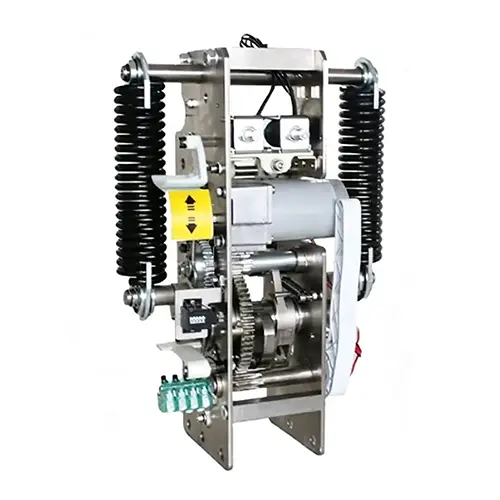
A dependable supplier does more than ship parts. For a product like the Vacuum Interrupter Operating Mechanism, supplier experience affects design accuracy, material selection, production control, testing quality, and technical communication. This is especially important for buyers who need batch purchasing, replacement matching, or OEM support.
Wenzhou Xifa Electrical Equipment Co., Ltd. serves customers in the electrical equipment field with products related to vacuum circuit breakers and medium voltage distribution components. For buyers, working with a capable manufacturer can help reduce uncertainty during product selection, installation confirmation, and long-term use.
When evaluating a supplier, buyers should ask for technical drawings, model compatibility, rated parameters, testing procedures, packaging details, and delivery capacity. A clear answer before ordering is far better than solving installation problems after the product reaches the project site.
FAQ
What is a Vacuum Interrupter Operating Mechanism?
It is the mechanical control system that drives the opening and closing movement of a vacuum interrupter inside a vacuum circuit breaker. It stores and releases energy so the contacts can move quickly and reliably.
Why is the mechanism important for medium voltage protection?
It ensures that the breaker can respond to fault signals with proper speed and force. Without a reliable mechanism, even a good vacuum interrupter may fail to perform correctly.
Can one mechanism fit every vacuum circuit breaker?
No. Buyers must confirm rated voltage, breaker model, installation dimensions, linkage structure, control method, and operating requirements before purchasing.
What causes operating mechanism failure?
Common causes include worn linkages, weak springs, poor lubrication, dust contamination, coil problems, loose fasteners, incorrect installation, and long-term lack of inspection.
Is a motor operating mechanism better than a manual one?
It depends on the project. Motor operation is better for remote or automated systems, while manual operation may be suitable for simpler applications with local control needs.
How should buyers choose a reliable supplier?
Buyers should check production experience, technical support, testing capability, model compatibility, customization options, and whether the supplier can provide clear documentation before shipment.
Conclusion
The Vacuum Interrupter Operating Mechanism may not be the most visible part of a medium voltage circuit breaker, but it is one of the most decisive. It controls the physical action that allows the vacuum interrupter to protect circuits, reduce fault impact, and support stable power distribution. For buyers, choosing the right mechanism means fewer switching failures, smoother installation, longer service life, and greater confidence in daily operation.
If you are selecting components for vacuum circuit breakers, switchgear assemblies, substations, industrial power systems, or replacement projects, Wenzhou Xifa Electrical Equipment Co., Ltd. can provide practical product support and technical communication for your application needs. For model selection, quotation, customization details, or project consultation, please contact us today and let our team help you find a reliable solution for your medium voltage switching system.