News

Which Air Circuit Breaker ACB Should You Choose for Safer Low Voltage Power Distribution?

2026-05-14 0 Leave me a message

Article Summary

Selecting an Air Circuit Breaker ACB is not only about matching current ratings. For engineers, panel builders, factory owners, project contractors, and procurement teams, the real challenge is choosing a breaker that can protect equipment, reduce downtime, fit the switchgear design, support future load expansion, and remain dependable after years of operation. This article explains how an Air Circuit Breaker ACB works, where it is commonly used, which specifications matter most, and how buyers can avoid costly mistakes during selection. It also introduces practical purchasing considerations for working with Wenzhou Xifa Electrical Equipment Co., Ltd. when sourcing ACB solutions for industrial and commercial power systems.

Article Outline

  • Understanding the function of an Air Circuit Breaker ACB in low voltage distribution systems.
  • Identifying the most common purchasing mistakes made by project buyers and panel builders.
  • Reviewing key parameters such as rated current, breaking capacity, pole number, trip unit, installation type, and operation mode.
  • Comparing ACBs with MCCBs and VCBs from a practical application perspective.
  • Explaining why supplier capability, technical support, testing, and customization matter in long-term operation.
  • Providing a practical FAQ section for buyers who need clear answers before sending an inquiry.

Why does the right Air Circuit Breaker ACB matter so much?

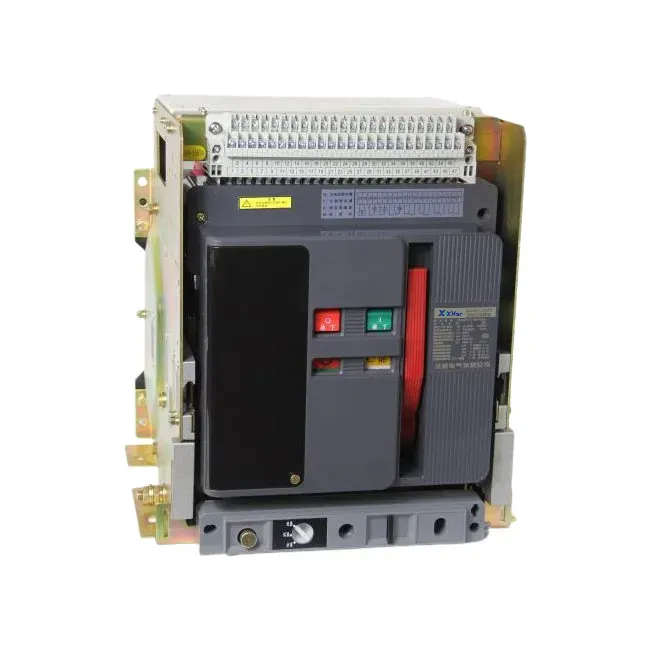
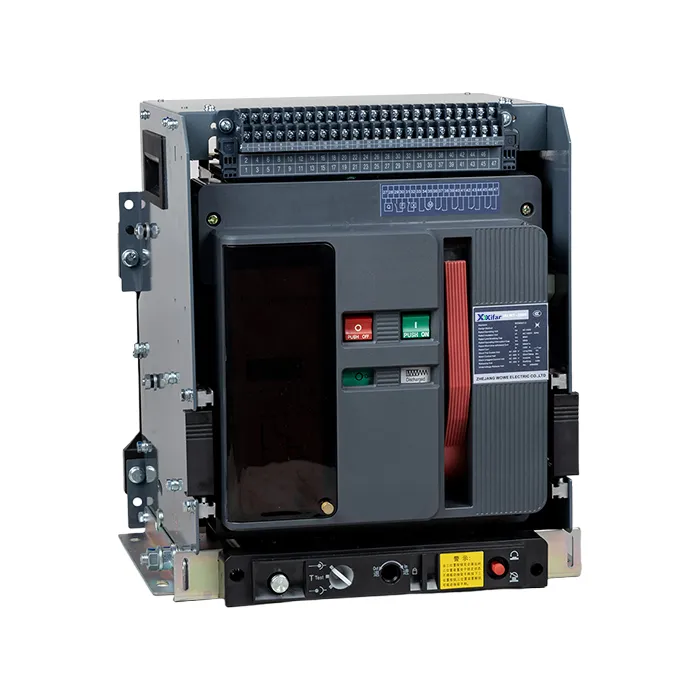
Air Circuit Breaker ACB

In a low voltage power distribution system, the main breaker is often treated as one item on a procurement list. That is a risky way to look at it. An Air Circuit Breaker ACB is usually installed at a critical point of the system, such as the incoming panel, main distribution cabinet, generator output panel, transformer secondary side, or large feeder circuit. Once it fails to trip properly, the result may not be a small electrical fault. It can become production shutdown, equipment damage, fire risk, or expensive emergency maintenance.

Many buyers search for an ACB by current rating only, such as 630A, 1000A, 1600A, 2000A, or 3200A. Current rating matters, of course, but it is not the full story. The breaker must also match the short-circuit level of the installation site, the protection requirements of the load, the switchgear structure, the operating environment, and the maintenance plan of the facility.

A good Air Circuit Breaker ACB gives the electrical system a controlled way to disconnect abnormal current. It protects cables, busbars, transformers, generators, motors, and downstream equipment. More importantly, it gives maintenance teams confidence. When a system is built around a breaker with stable mechanical action, accurate tripping, and clear protection settings, the whole distribution room becomes easier to manage.

The real purchasing question is not simply “How much is the breaker?” A better question is: “Will this breaker still protect my system correctly when a fault happens at the worst possible time?”

What does an Air Circuit Breaker ACB actually do?

An Air Circuit Breaker ACB is a low voltage switching and protection device that uses air as the arc extinguishing medium. When the contacts separate during fault interruption, an electric arc is formed. The breaker guides and cools the arc through arc chutes until the current is safely interrupted. This design makes ACBs suitable for high-current low voltage applications where reliability, maintainability, and adjustable protection are important.

In practical use, an Air Circuit Breaker ACB can perform several important functions. It can manually or electrically switch the circuit on and off. It can trip automatically when overload, short circuit, undervoltage, or ground fault conditions occur, depending on the configuration of the trip unit. In many modern electrical systems, intelligent trip units also support measurement, communication, fault records, and adjustable protection curves.

Compared with smaller breakers, an ACB is often chosen for the main power distribution level because it can handle higher frame currents and stronger fault interruption requirements. It is also easier to inspect and maintain in large electrical cabinets, especially when using a draw-out design. For facilities that cannot afford long downtime, this maintainability is not a small advantage.

  • Switching function: Opens and closes the main circuit under normal operating conditions.
  • Overload protection: Trips when the load current remains above the safe range for too long.
  • Short-circuit protection: Interrupts dangerous fault current quickly to protect the system.
  • Ground fault protection: Helps reduce risks caused by insulation failure or leakage current.
  • Undervoltage protection: Trips or prevents closing when voltage conditions are unsafe.
  • System monitoring: Intelligent units may provide current display, fault memory, and communication options.

Which buyer pain points should be solved before ordering?

Buyers rarely struggle because they cannot find an Air Circuit Breaker ACB. They struggle because too many models look similar on paper. A low price may look attractive at first, but the wrong choice can lead to mismatch, installation delay, overheating, nuisance tripping, poor selectivity, or difficult after-sales support.

For panel builders, dimensional compatibility is often a major concern. A breaker that does not fit the cabinet design can affect busbar layout, door opening, operating handle position, and maintenance space. For factory users, the biggest concern is usually stable operation. They need a breaker that trips when it should, stays closed when the system is healthy, and can be serviced without unnecessary downtime.

For contractors, delivery speed and documentation are also important. A project may require product photos, drawings, wiring diagrams, test reports, certificates, nameplate details, and packing information before shipment. If the supplier cannot respond clearly, the project schedule may suffer.

Buyer Concern Why It Matters What to Confirm Before Ordering
Current rating mismatch An undersized breaker may overheat or trip too often, while an oversized breaker may reduce protection accuracy. Rated current, frame size, load type, future expansion allowance.
Insufficient breaking capacity The breaker may not safely interrupt high fault current at the installation point. Icu, Ics, site short-circuit calculation, transformer capacity.
Wrong installation structure The breaker may not fit the switchgear or may be inconvenient to maintain. Fixed type or draw-out type, dimensions, panel cutout, busbar connection.
Inaccurate protection setting Poor coordination can cause unnecessary shutdowns or failure to isolate the correct fault zone. Trip unit type, long-time delay, short-time delay, instantaneous and ground fault settings.
Weak technical support Buyers may face delays during installation, testing, or commissioning. Supplier response speed, drawings, manuals, wiring support, after-sales service.

Which specifications should you check before purchase?

A professional Air Circuit Breaker ACB selection starts with the electrical system, not with the catalog page. Before confirming the model, buyers should collect basic project information, including rated voltage, rated current, frequency, number of poles, short-circuit level, cabinet type, operating method, protection requirements, and communication needs.

Rated current is usually the first parameter buyers mention. However, rated service short-circuit breaking capacity is just as important. A breaker with a high ultimate breaking capacity but lower service breaking capacity may not be the best choice for demanding industrial systems. For critical loads, buyers should pay attention to both Icu and Ics values.

The trip unit deserves special attention. A basic protection unit may be enough for a simple distribution panel, while a modern factory, data center, commercial building, or renewable energy project may require more advanced protection and monitoring functions. Adjustable settings can help improve selectivity between upstream and downstream devices.

  • Rated operational voltage: Confirm whether the breaker matches the low voltage distribution system, such as AC 400V or similar project requirements.
  • Rated current: Choose the current level based on actual load, cable capacity, transformer output, and future expansion.
  • Breaking capacity: Check whether the breaker can safely interrupt the maximum prospective short-circuit current.
  • Pole number: Select 3P or 4P according to the system grounding method and neutral line requirements.
  • Installation type: Fixed type is compact and economical; draw-out type is convenient for maintenance and replacement.
  • Operation mode: Manual operation may suit simple panels, while motorized operation is useful for remote control and automation.
  • Trip unit: Confirm whether the system needs basic, electronic, or intelligent protection functions.
  • Accessories: Consider shunt release, undervoltage release, auxiliary contacts, closing coil, motor mechanism, and communication module.

A practical tip for procurement teams: when asking for a quotation, send the supplier the panel drawing, system voltage, rated current, pole number, required breaking capacity, installation type, and accessory list together. This reduces back-and-forth communication and avoids model errors.

How does an Air Circuit Breaker ACB compare with other breakers?

Buyers often compare ACBs with MCCBs and VCBs. The difference is not about which one is universally better. It depends on voltage level, current range, installation position, protection demand, maintenance expectation, and budget.

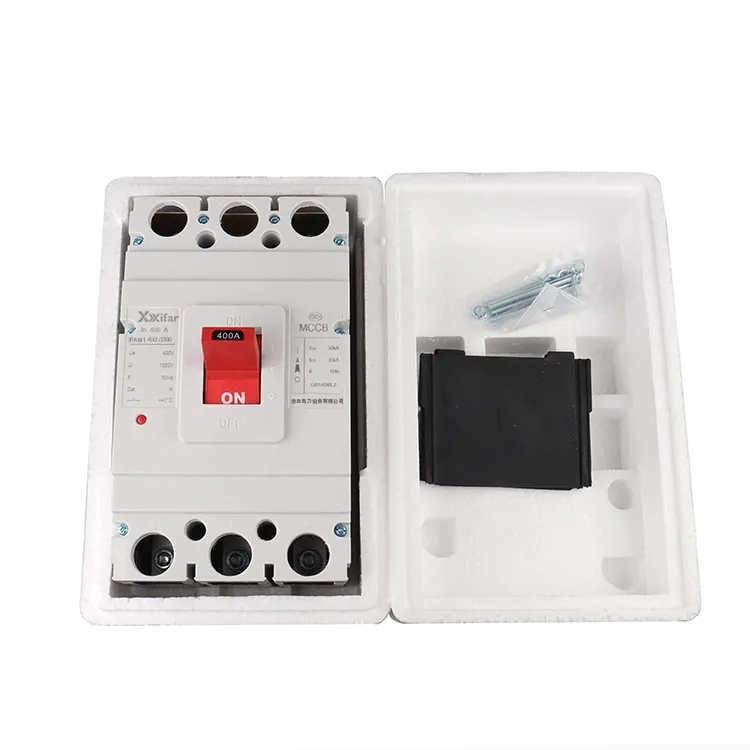
A Molded Case Circuit Breaker is widely used for lower current feeder circuits, machinery panels, and compact distribution applications. It is economical, compact, and simple to install. However, when the system current becomes higher and the protection requirements become more advanced, an Air Circuit Breaker ACB becomes more suitable.

A Vacuum Circuit Breaker is usually used in medium voltage systems. Its arc extinguishing takes place inside a vacuum interrupter, which is different from the air arc chute structure of an ACB. In simple terms, ACBs are commonly selected for low voltage main distribution, while VCBs are selected for medium voltage distribution.

Breaker Type Common Voltage Level Typical Use Main Advantage
Air Circuit Breaker ACB Low voltage power distribution Main incoming panel, large feeder, generator output, transformer secondary side High current capacity, adjustable protection, convenient maintenance, intelligent options
Molded Case Circuit Breaker MCCB Low voltage distribution Branch circuits, smaller feeders, machinery panels Compact size, economical cost, easy installation
Vacuum Circuit Breaker VCB Medium voltage distribution Substations, medium voltage switchgear, industrial power networks Strong arc extinguishing in vacuum, suitable for medium voltage interruption

Where is an Air Circuit Breaker ACB commonly used?

An Air Circuit Breaker ACB is often used wherever low voltage power distribution needs strong protection and reliable switching. It appears in industrial plants, commercial buildings, data centers, power distribution rooms, hospitals, airports, rail transit facilities, water treatment plants, mining projects, and renewable energy systems.

In manufacturing plants, the ACB may protect the main incoming line of the workshop. In a commercial building, it may serve as the main breaker in the low voltage switchboard. In a data center, it may help protect critical power paths where downtime is extremely expensive. In renewable energy stations, ACBs can be used in low voltage distribution cabinets connected with transformers, inverters, or auxiliary systems.

The common point in all these applications is simple: the system needs a dependable device at a key protection position. When the electrical load is large, the fault current is serious, and the operating environment cannot tolerate repeated failures, a properly selected Air Circuit Breaker ACB becomes a necessary investment rather than an optional component.

  • Low voltage switchgear and main distribution boards.
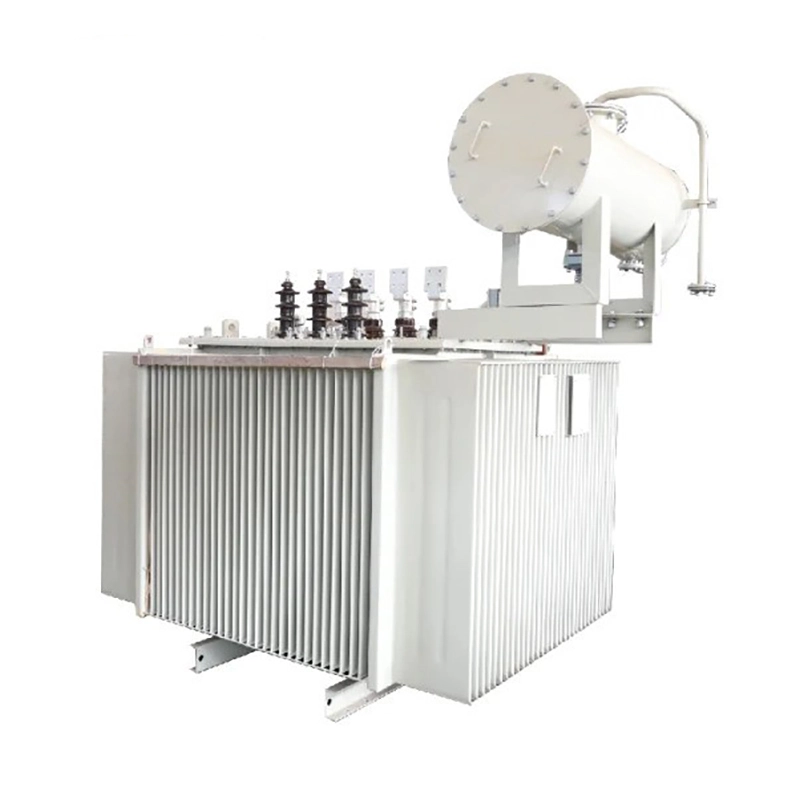
  • Transformer secondary protection systems.
  • Generator control and distribution panels.
  • Industrial motor control and large feeder circuits.
  • Commercial building power distribution rooms.
  • Data centers and communication facilities.
  • Renewable energy and compact substation projects.
  • Infrastructure projects requiring stable electrical protection.

How should you evaluate a reliable ACB supplier?

A reliable supplier should do more than sell a breaker. The supplier should understand the working conditions behind the order. For buyers who are not electrical specialists, this matters even more. Clear technical communication can prevent wrong model selection before production begins.

Wenzhou Xifa Electrical Equipment Co., Ltd. supplies electrical products for power distribution applications, including Air Circuit Breaker ACB solutions for low voltage systems. For buyers, the value is not only in the product itself, but also in model recommendation, production capability, customization options, factory testing, and communication support before and after delivery.

When evaluating a supplier, buyers should ask practical questions. Can the supplier provide technical drawings? Can they recommend the correct current rating and breaking capacity based on project information? Can they support fixed type and draw-out type structures? Can they provide accessories such as motor operators, shunt releases, undervoltage releases, auxiliary contacts, and intelligent trip units? Can they respond quickly when the installer has questions?

Supplier Evaluation Point What a Buyer Should Look For
Product range Multiple current ratings, pole options, operation modes, and accessory configurations.
Technical support Clear communication on selection, drawings, wiring, installation, and commissioning.
Quality control Routine factory inspection, mechanical operation checks, insulation checks, and tripping performance verification.
Customization ability Support for project-specific requirements, cabinet matching, accessories, and packaging needs.
Delivery coordination Reasonable lead time, export packing, shipping documents, and responsive order updates.

What maintenance habits help extend service life?

Air Circuit Breaker ACB

Even a high-quality Air Circuit Breaker ACB needs proper installation and periodic inspection. Electrical protection equipment works under mechanical, thermal, and electrical stress. Dust, moisture, loose connections, aging grease, contact wear, and poor operating conditions can reduce long-term reliability.

A maintenance plan does not need to be complicated, but it must be consistent. Operators should keep the switchgear clean and dry, check for abnormal heating, inspect the tightness of connections, verify the operating mechanism, and review trip records when available. For draw-out type ACBs, the racking mechanism should be operated correctly to avoid mechanical damage.

In many cases, breaker failure is not sudden. There are warning signs, such as unusual noise, burning smell, visible discoloration, unstable closing action, frequent nuisance tripping, or abnormal temperature rise at terminals. Ignoring these signs can turn a manageable maintenance issue into a serious electrical accident.

  • Keep the breaker and cabinet free from dust, moisture, and corrosive gas.
  • Check terminal connections and busbar contact points regularly.
  • Inspect arc chutes, contacts, and insulation parts according to maintenance requirements.
  • Operate the mechanism periodically if the breaker stays in one position for a long time.
  • Confirm trip unit settings after commissioning or system modification.
  • Record fault events and maintenance actions for future troubleshooting.
  • Replace worn accessories or damaged parts before they affect system safety.

FAQ about Air Circuit Breaker ACB

What is the main purpose of an Air Circuit Breaker ACB?

The main purpose of an Air Circuit Breaker ACB is to protect low voltage power distribution systems from overload, short circuit, ground fault, and other abnormal electrical conditions. It also allows operators to switch large circuits safely during normal operation or maintenance.

Is an Air Circuit Breaker ACB suitable for medium voltage systems?

An Air Circuit Breaker ACB is mainly used in low voltage distribution systems. For medium voltage applications, a Vacuum Circuit Breaker VCB is usually a more suitable choice. Buyers should confirm system voltage before selecting the breaker type.

Which is better, fixed type or draw-out type ACB?

Fixed type ACBs are often more compact and economical. Draw-out type ACBs are easier to inspect, replace, and maintain without major cabinet disassembly. For important power systems where maintenance speed matters, draw-out type is often preferred.

Do I need an intelligent trip unit?

If the system requires adjustable protection, current display, fault records, communication, or better coordination with other protective devices, an intelligent trip unit is a practical choice. For simpler systems, a basic trip unit may be enough.

How do I choose the correct rated current?

The rated current should be selected according to the actual load current, transformer capacity, cable size, temperature conditions, and future expansion plan. It should not be chosen only by guessing or copying an old model number.

Why is breaking capacity important?

Breaking capacity shows whether the breaker can safely interrupt a high short-circuit current. If the selected breaker has insufficient breaking capacity, it may fail during a serious fault. This is one of the most important safety parameters in ACB selection.

Can an Air Circuit Breaker ACB be customized?

Yes. Depending on project needs, buyers may request different current ratings, pole numbers, operation modes, installation structures, trip units, accessories, and packaging requirements. It is best to provide project details before quotation.

What information should I send before requesting a quotation?

You should provide rated voltage, rated current, pole number, breaking capacity, installation type, operation mode, trip unit requirements, accessory list, quantity, project destination, and any cabinet drawings if available. This helps the supplier recommend the correct Air Circuit Breaker ACB more accurately.

How can you move forward with the right Air Circuit Breaker ACB?

Choosing an Air Circuit Breaker ACB is a decision that affects system safety, maintenance efficiency, and long-term operating cost. A well-matched breaker helps protect valuable equipment, reduce unplanned downtime, and give your electrical team more confidence when managing critical distribution systems.

If you are planning a low voltage distribution project, upgrading switchgear, sourcing ACBs for panel assembly, or comparing models for an industrial facility, Wenzhou Xifa Electrical Equipment Co., Ltd. can help you review the key selection points and provide suitable product options based on your application.

For model selection, technical details, quotation support, or customized Air Circuit Breaker ACB requirements, please contact us today and share your project specifications. Our team will help you find a practical, safe, and cost-effective solution for your power distribution system.

Related News
Leave me a message
X
We use cookies to offer you a better browsing experience, analyze site traffic and personalize content. By using this site, you agree to our use of cookies. Privacy Policy
Reject Accept