Article Summary: A Zero Sequence CT Current Transformer Donut Type is an important sensing component for detecting ground faults, leakage currents, and insulation abnormalities in electrical systems. With a toroidal core surrounding the conductors, it can detect the residual current produced when the vector sum of phase currents is no longer zero. This article explains its operating principle, construction, technical characteristics, applications, selection considerations, and why reliable manufacturing quality matters for modern power protection systems.
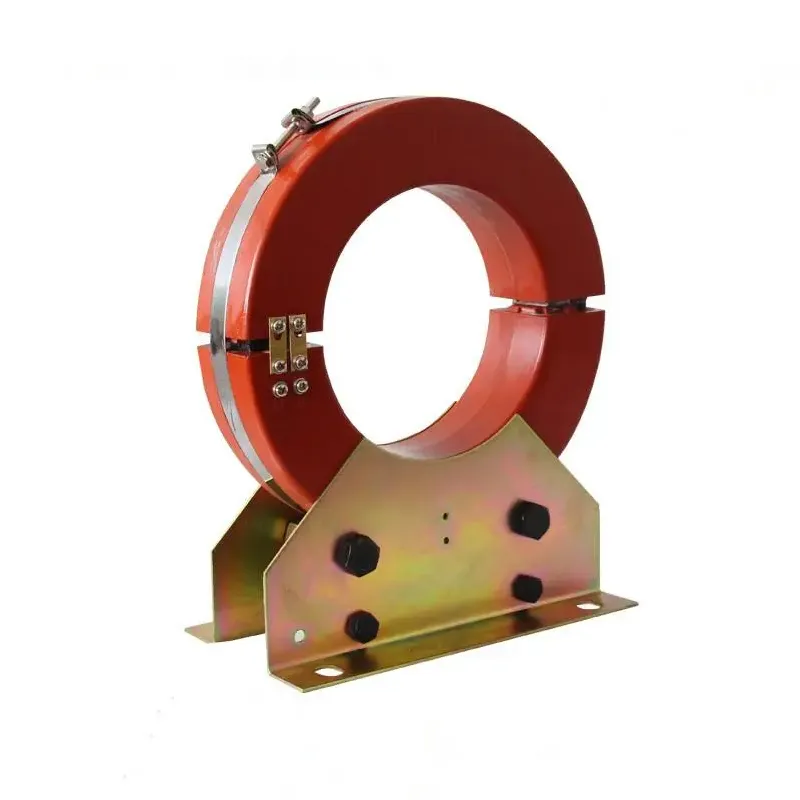
Table of Contents
- What Is a Zero Sequence CT Current Transformer Donut Type?
- How Does a Donut Type Zero Sequence CT Work?
- What Are the Key Construction Features?
- What Technical Specifications Should Buyers Consider?
- Where Is a Zero Sequence CT Commonly Used?
- How Should You Select the Right Zero Sequence CT?
- What Are the Main Advantages?
- FAQ About Zero Sequence CT Current Transformer Donut Type
- Conclusion
What Is a Zero Sequence CT Current Transformer Donut Type?
For electrical engineers and power distribution professionals, accurate residual-current detection is essential for identifying faults before they develop into equipment damage, fire hazards, or unexpected power interruptions. A Zero Sequence CT Current Transformer Donut Type is specifically designed for this purpose.
Unlike a conventional current transformer that primarily measures the current flowing through an individual conductor, a zero sequence CT monitors the combined magnetic effect of multiple conductors passing through its toroidal core. Under normal three-phase conditions, the vector sum of the phase currents is approximately zero. When leakage or a ground fault occurs, an imbalance develops, creating a measurable zero sequence current.
According to the product information provided by XiFa, its zero sequence CT uses a toroidal core and secondary winding and is designed for applications including ground-fault protection, leakage-current detection, insulation monitoring, and relay protection. The product is suitable for 50 Hz power systems and different neutral-point configurations.
For buyers looking for a Zero Sequence CT Current Transformer Donut Type, understanding both the electrical principle and physical construction is important before selecting a model.
How Does a Donut Type Zero Sequence CT Work?
The operating principle is based on the magnetic balance of the conductors passing through the CT aperture. In a healthy three-phase circuit, the currents normally balance each other, so the resulting magnetic flux inside the toroidal core remains very small.
When an insulation failure or ground leakage occurs, part of the current takes an unintended path to ground. The current balance is therefore disturbed. The resulting residual magnetic flux induces a secondary signal that can be transmitted to a protection relay, monitoring instrument, or other control equipment.
The simplified detection process can be understood as follows:
- Phase conductors pass through the toroidal CT core.
- The CT continuously senses the combined magnetic field.
- A current imbalance produces zero sequence current.
- The secondary winding generates a corresponding electrical signal.
- The protection system evaluates the signal.
- If the preset protection threshold is exceeded, the relay can initiate an alarm or circuit interruption.
This arrangement provides a practical method for detecting relatively small residual currents without requiring a conventional CT on every individual conductor.
What Are the Key Construction Features?
The performance of a donut type zero sequence CT depends strongly on its magnetic core, winding, insulation system, enclosure, and manufacturing accuracy. XiFa states that its product uses oxygen-free copper enameled wire for winding and high-permeability silicon steel sheets for the magnetic core. These material choices are intended to support electrical conductivity, mechanical strength, and sensitivity to small zero sequence currents.
Toroidal Magnetic Core
The circular core creates a closed magnetic path around the conductors. High magnetic permeability helps the CT respond effectively to relatively small residual currents.
Secondary Winding
The secondary winding converts the detected magnetic flux into a usable electrical signal for protection and monitoring equipment. Winding quality directly affects signal consistency and long-term reliability.
Insulation and Encapsulation
The product structure may incorporate epoxy resin or silicone rubber housing. Such protection helps improve resistance to moisture and environmental contamination, which is particularly important in electrical distribution environments.
Solid-Core and Split-Core Options
Installation requirements can vary. Solid-core designs generally require cables to be passed through the CT before connection, whereas split-core configurations can be useful for retrofit projects where disconnecting existing conductors is undesirable.
What Technical Specifications Should Buyers Consider?
Choosing a CT should never depend only on physical diameter. Electrical compatibility, relay requirements, conductor arrangement, and installation conditions should all be evaluated together.
| Parameter | Reference Information | Why It Matters |
|---|---|---|
| CT Type | Toroidal / donut type | Determines the sensing structure and installation method |
| Frequency | 50 Hz | Ensures suitability for the intended power system |
| Core Options | LXK-Φ80, Φ100, Φ120, Φ150, Φ180, Φ220, Φ240 | Provides different physical aperture options |
| Relay Type | DD11/60, DD1/60 | Helps match the CT with the protection system |
| Connection Method | Series / Parallel | Influences the applicable configuration |
| Primary Current | Approx. 2.4–6 A in listed configurations | Should be matched with the intended protection arrangement |
The manufacturer's published specifications list several LXK models, including Φ80, Φ100, Φ120, Φ150, Φ180, Φ220, and Φ240 versions, with different relay, connection, scale-value, and primary-current combinations. Buyers should confirm the exact configuration with the manufacturer before placing an order.
Where Is a Zero Sequence CT Commonly Used?
The ability to detect residual current makes this type of CT useful across a wide range of electrical protection applications. It can be integrated into protection systems where early detection of leakage or ground faults is important.
- Ground-fault protection: Detects residual current associated with faults to ground.
- Leakage-current monitoring: Helps identify abnormal current paths.
- Insulation monitoring: Supports the identification of deteriorating insulation conditions.
- Power distribution systems: Provides residual-current information for protection relays.
- Smart grids: Can be integrated into intelligent monitoring and protection systems.
- Industrial equipment: Helps monitor electrical equipment where continuous fault detection is required.
- Building electrical networks: Supports electrical safety and distribution protection.
- Rail transit systems: Can be incorporated into specialized electrical monitoring systems.
XiFa specifically identifies smart grids, rail transit, building electrical systems, and industrial equipment monitoring among the application areas for its zero sequence CT products.
How Should You Select the Right Zero Sequence CT?
For procurement teams, selecting the right model involves more than simply choosing the largest available core. A systematic evaluation can reduce compatibility problems and improve installation efficiency.
- Check the cable arrangement. Confirm the number and arrangement of conductors that will pass through the CT aperture.
- Measure the required aperture. Ensure that the internal diameter provides sufficient clearance for the existing cables.
- Confirm the protection relay. The CT output and relay characteristics must be compatible.
- Verify the electrical system. Check frequency, neutral configuration, grounding method, and other system requirements.
- Evaluate the installation environment. Moisture, pollution, temperature, and available installation space can influence the appropriate construction.
- Consider retrofit requirements. Split-core designs may provide greater convenience when existing cables cannot easily be disconnected.
- Review manufacturer quality. Core material, winding materials, insulation, testing procedures, and manufacturing consistency should be considered before bulk procurement.
For international buyers sourcing from a China manufacturer or supplier, technical documentation and model confirmation should be obtained before purchasing. This is particularly important when the CT will be integrated into a larger protection system.
What Are the Main Advantages?
A properly selected donut type zero sequence CT can provide several practical benefits for electrical protection systems:
- High sensitivity: A suitable magnetic core can help detect small residual currents.
- Compact structure: The toroidal configuration can fit efficiently around existing conductors.
- Non-intrusive sensing: Current detection is achieved without placing the primary winding in series with the circuit.
- Protection integration: Secondary signals can be connected to protection relays and monitoring equipment.
- Flexible installation: Available construction options can accommodate different installation scenarios.
- Broad application range: Suitable for industrial, commercial, infrastructure, and power distribution environments.
XiFa's product design combines a toroidal core with a secondary winding and protective housing, while the stated material selection emphasizes conductivity, mechanical strength, and magnetic sensitivity.
FAQ About Zero Sequence CT Current Transformer Donut Type
What is a Zero Sequence CT Current Transformer Donut Type used for?
It is primarily used to detect zero sequence or residual current caused by ground faults, leakage currents, and insulation problems. The resulting signal can be supplied to protection relays or monitoring equipment.
How does a donut type CT detect a ground fault?
The conductors pass through the toroidal core. Under balanced conditions, their magnetic effects largely cancel. A ground fault creates an imbalance, producing residual magnetic flux that the CT converts into a secondary electrical signal.
What core sizes are available?
The referenced XiFa product information lists LXK models with Φ80, Φ100, Φ120, Φ150, Φ180, Φ220, and Φ240 configurations. Exact specifications should be verified according to the selected model and protection application.
Can a zero sequence CT be used for retrofit projects?
Yes. Solid-core and split-core structures serve different installation requirements. A split-core design can be advantageous where existing cables cannot be disconnected during installation.
What should I provide when requesting a quotation?
Procurement teams should ideally provide the required core aperture, system frequency, conductor arrangement, relay model, connection method, primary-current requirements, installation environment, and quantity. Providing these details helps a China manufacturer or supplier recommend a compatible configuration more efficiently.
Conclusion
A Zero Sequence CT Current Transformer Donut Type provides a focused and practical approach to residual-current detection, making it valuable for ground-fault protection, leakage monitoring, insulation supervision, and intelligent electrical protection. Its toroidal core, secondary winding, insulation structure, and installation configuration all influence system performance. XiFa's published product information highlights high-permeability silicon steel, oxygen-free copper enameled wire, multiple LXK core sizes, and compatibility with 50 Hz power systems.
If you are sourcing a reliable Zero Sequence CT Current Transformer Donut Type for a new power distribution project, protection system, or retrofit application, contact us at XiFa to discuss your technical requirements, model selection, and quotation. Providing your system parameters in advance can help accelerate product matching and procurement.