News

How Does Air Circuit Breaker ACB Improve Power Distribution Safety and Reliability?

2026-04-07 0 Leave me a message

Article Summary

In modern power distribution, safety and continuity are never optional. When a fault occurs in a factory, data room, commercial building, or utility panel, the protection device must react fast, isolate the problem, and keep the rest of the system stable. That is exactly why Air Circuit Breaker ACB remains a core choice for low-voltage power distribution. In this article, I explain how an ACB works, where it fits best, what problems buyers usually face during selection, and how to compare frame size, breaking capacity, protection functions, installation conditions, and maintenance demands. I also discuss why working with an experienced manufacturer such as Wenzhou Xifa Electrical Equipment Co., Ltd. can make procurement, technical matching, and long-term operation much easier.


Table of Contents


What Will This Article Cover?

  • How Air Circuit Breaker ACB works in practical power distribution
  • Why ACBs are often chosen as incoming or main protection devices
  • What technical points influence reliability and service life
  • How buyers can avoid mismatched specifications and costly downtime
  • What to ask a manufacturer before placing an order

What Is an Air Circuit Breaker ACB?

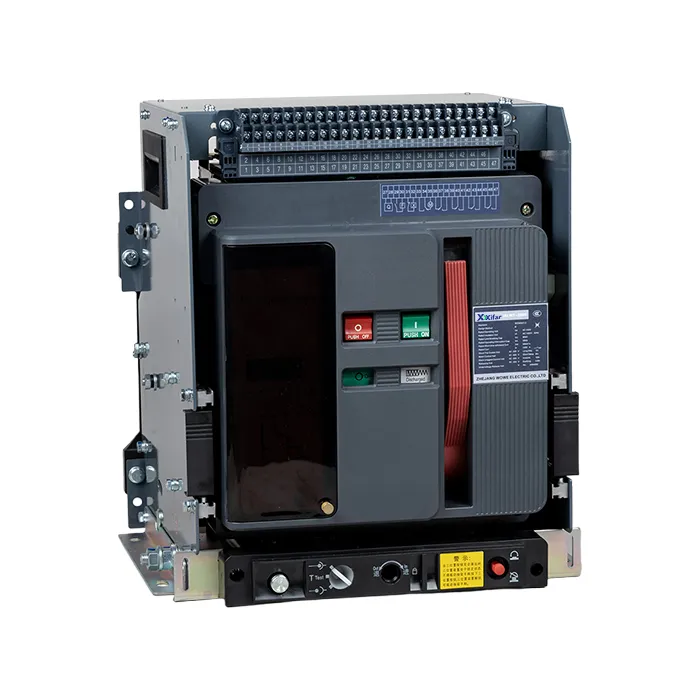
Air Circuit Breaker ACB

An Air Circuit Breaker ACB is a low-voltage protective switching device designed to interrupt abnormal current conditions such as overload, short circuit, and in many configurations, ground fault. It uses air as the medium for arc extinguishing and is typically installed in low-voltage distribution systems where dependable interruption capacity and repeatable operation are critical.

In plain terms, when a power system starts drawing dangerous current, the ACB detects the fault and disconnects the circuit before cables, transformers, switchboards, or connected equipment suffer severe damage. This is why ACBs are often positioned at the heart of large electrical panels rather than at the edge of branch circuits.

Compared with smaller protective devices, an ACB is built for higher current ratings, stronger interruption capability, and broader protection logic. That makes it especially suitable for main incomers, bus couplers, and high-capacity feeder circuits.

  • Designed for low-voltage power distribution
  • Suitable for high current applications
  • Supports coordinated protection strategies
  • Can integrate intelligent trip functions and monitoring features
  • Helps reduce the impact of fault propagation across the system

Why Does Air Circuit Breaker ACB Matter in Low-Voltage Systems?

Many buyers focus first on current rating and price, but the real value of an Air Circuit Breaker ACB shows up when the system is under stress. In a healthy power network, every breaker seems acceptable. The real difference appears during overloads, sudden short circuits, nuisance tripping events, or repeated switching operations.

A well-matched ACB gives me more than simple disconnection. It gives me selective coordination, safer maintenance conditions, better equipment protection, and a stronger chance of keeping the unaffected sections energized. In industrial or commercial environments, that directly translates into less downtime, fewer repair costs, and less production loss.

This matters even more in facilities with sensitive loads, large motors, transformer-fed panels, backup power schemes, or dense distribution architectures. Once fault energy rises, protection quality stops being a paperwork issue and becomes a business issue.

  1. It protects critical assets from destructive fault energy.
  2. It improves continuity by isolating only the faulted section when coordination is correct.
  3. It supports operator safety through dependable opening and fault interruption.
  4. It helps modern panels support monitoring, maintenance planning, and operational control.

What Buyer Problems Does Air Circuit Breaker ACB Solve?

When buyers look for an Air Circuit Breaker ACB, they are usually not buying a generic component. They are trying to solve one or more painful issues inside a real project. Some are replacing unstable breakers that trip too often. Some are building a new low-voltage panel and need dependable protection matching. Others are fighting lead times, unclear technical communication, or poor after-sales support.

The most common problem is specification mismatch. A breaker may seem acceptable on paper, but once installed, it may not match fault level requirements, wiring conditions, control scheme expectations, or mechanical layout limits inside the panel. This is where procurement becomes expensive.

Here are the buyer pain points I see most often:

  • Unclear current selection: The project team knows the load, but not the correct frame size or trip setting margin.
  • Breaking capacity uncertainty: Some buyers select by rated current alone and overlook fault level requirements.
  • Poor coordination: Upstream and downstream protection may trip together, causing unnecessary outages.
  • Space limitations: The switchboard may have mechanical or thermal constraints that affect installation.
  • Delivery pressure: Fast projects need ready production, stable supply, and responsive technical support.
  • Maintenance concerns: Users want long service life, easier inspection, and clear spare parts access.
  • Communication issues: Some suppliers only provide catalog language and do not solve practical engineering questions.

A strong ACB solution addresses all of these together, not just one line in a quotation sheet.


How Should I Choose the Right Air Circuit Breaker ACB?

Choosing the right Air Circuit Breaker ACB starts with load reality, not catalog habit. I would never begin with appearance or nominal price alone. I would begin with the system itself: operating current, fault level, installation mode, voltage, number of poles, control requirements, selectivity expectations, ambient conditions, and maintenance access.

A careful selection process usually follows this logic:

  1. Confirm the system voltage and application type.
  2. Determine rated current based on actual load and growth margin.
  3. Verify the prospective short-circuit current at the installation point.
  4. Choose appropriate breaking capacity and service breaking performance.
  5. Confirm the required protection functions such as overload, short circuit, and ground fault.
  6. Check whether fixed or withdrawable design suits the panel and maintenance strategy.
  7. Review communication, accessories, motor operation, auxiliary contacts, and undervoltage release requirements.
  8. Confirm compliance, testing, production capability, and support from the supplier.

If the installation is in a high-duty environment such as an industrial plant, data center, utility room, or renewable energy distribution station, I would also pay close attention to operating frequency, service conditions, heat dissipation, and the ease of preventive maintenance.


Which Technical Factors Should Be Compared First?

Factor Why It Matters What Buyers Should Check
Rated Current Determines whether the breaker can carry the normal load continuously Actual operating current, future expansion margin, panel temperature rise
Breaking Capacity Determines whether the breaker can safely interrupt fault current Prospective short-circuit current at installation point, system study results
Trip Unit Functions Controls protection logic and fault response behavior Overload, short circuit, instantaneous, ground fault, adjustable settings
Number of Poles Affects compatibility with system configuration 3P or 4P requirement, neutral protection logic, distribution scheme
Mechanical Life Reflects durability under repeated switching and operating cycles Switching frequency, maintenance interval, operating mechanism reliability
Installation Type Influences panel design and maintenance access Fixed or withdrawable structure, available space, service strategy
Communication and Accessories Supports system integration and remote operation Auxiliary contacts, shunt release, motor operator, monitoring interface
Supplier Support Reduces risk before and after delivery Technical response speed, customization ability, documentation, testing

This is where experienced suppliers stand out. A good quotation is not only a price. It should reflect whether the supplier understood the system and anticipated the real operational needs.


Where Is Air Circuit Breaker ACB Commonly Used?

An Air Circuit Breaker ACB is widely used in low-voltage distribution systems that demand dependable high-current protection and switching control. It is especially common where the electrical network is large enough that a simple molded case breaker no longer offers sufficient capacity, coordination flexibility, or operational robustness.

Typical applications include:

  • Main incoming panels in industrial facilities
  • Commercial building distribution boards
  • Transformer secondary side protection
  • Bus coupler applications in switchboards
  • Feeder protection for large loads
  • Power distribution in substations and utility support systems
  • Renewable energy and infrastructure projects
  • Data centers and facilities requiring stable power continuity

In these environments, the breaker must do more than open and close. It must remain stable under continuous duty, respond predictably during faults, and integrate smoothly with the rest of the protection scheme.


Why Do Installation and Maintenance Affect Performance So Much?

Even the best Air Circuit Breaker ACB can underperform if installation quality and maintenance discipline are weak. Buyers sometimes blame the breaker when the real issue is panel design, cable termination stress, poor ventilation, incorrect setting values, or neglected inspection schedules.

I always treat installation and maintenance as part of the product value because they directly affect electrical reliability and service life.

Installation details that matter:

  • Correct mounting and alignment within the panel
  • Proper conductor sizing and secure connection torque
  • Adequate ventilation and thermal management
  • Protection setting verification before energization
  • Functional testing of releases, control circuits, and accessories

Maintenance points that should not be ignored:

  • Routine visual inspection for wear, overheating, or contamination
  • Periodic mechanical operation checks
  • Inspection of contact condition and insulation state
  • Verification of trip unit function and setting accuracy
  • Timely replacement of worn accessories and operating parts

When maintenance is planned rather than reactive, the ACB becomes a dependable long-term asset instead of a hidden system risk.


Which Supplier Qualities Actually Matter?

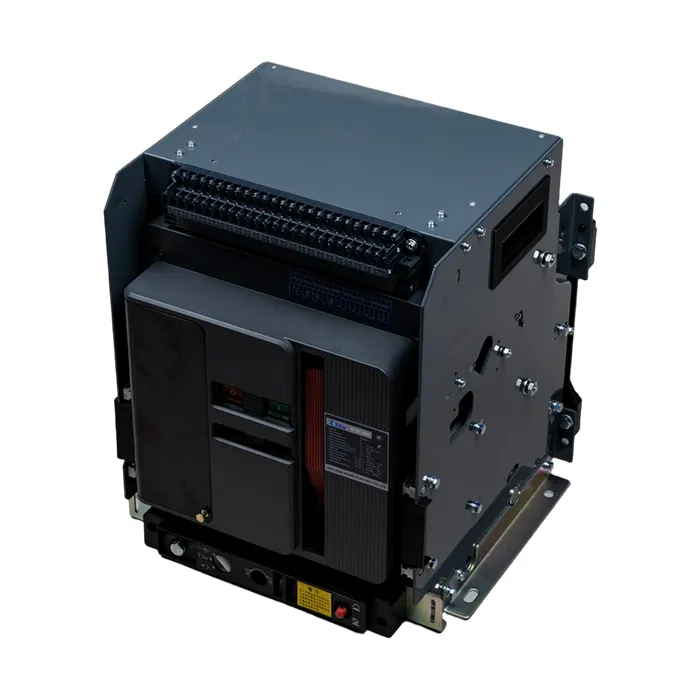
Air Circuit Breaker ACB

Plenty of catalogs make products look similar. What separates one source from another is how well the supplier supports engineering, production quality, delivery stability, and post-sale communication. For buyers sourcing an Air Circuit Breaker ACB, those differences can decide whether the project moves smoothly or becomes a cycle of delays and corrections.

This is where a manufacturer such as Wenzhou Xifa Electrical Equipment Co., Ltd. becomes relevant. Buyers usually need more than a standard list of models. They need a factory that understands application requirements, responds clearly, and can align product configuration with real project demands.

I would look for the following supplier strengths:

  • Clear product specification and honest parameter communication
  • Stable manufacturing and quality control procedures
  • Support for customization when projects require special configurations
  • Fast feedback on selection, installation, and application questions
  • Reliable packaging, delivery coordination, and documentation
  • Practical after-sales support instead of generic replies

A good supplier reduces technical ambiguity. That is often more valuable than a small price advantage that disappears the moment the wrong breaker reaches the panel shop.


What Is the Smart Takeaway for Buyers?

If I had to summarize the buying logic in one sentence, it would be this: choose an Air Circuit Breaker ACB based on system reality, not only on nominal current or lowest quotation. The right ACB protects equipment, supports continuity, improves operational safety, and lowers lifecycle risk. The wrong one may still fit the panel, but it will not truly protect the project.

For buyers working on industrial plants, commercial complexes, substations, renewable projects, and other low-voltage distribution systems, the best result comes from balancing electrical performance, protection coordination, mechanical durability, and supplier responsiveness. That is why technical discussion matters just as much as pricing.

If you are reviewing specifications, comparing models, or planning a new power distribution project, this is the right moment to work with a manufacturer that understands practical application needs. Wenzhou Xifa Electrical Equipment Co., Ltd. is positioned to support customers looking for dependable circuit protection solutions with clear communication and project-oriented service. If you want help narrowing down the right model, matching the breaker to your panel design, or discussing customized requirements, contact us and start the conversation with your application details.


What Questions Do Buyers Ask Most Often?

Q1. What is the main purpose of an Air Circuit Breaker ACB?

Its main purpose is to protect low-voltage electrical systems from overload, short circuit, and other abnormal current conditions while allowing safe switching and system control.

Q2. Why would I choose an Air Circuit Breaker ACB instead of a smaller breaker?

Because large distribution systems often need higher current ratings, stronger interruption capacity, and more flexible protection settings than smaller breakers can provide.

Q3. Is Air Circuit Breaker ACB suitable for industrial use?

Yes. It is widely used in industrial facilities, commercial buildings, substations, and other sites where stable low-voltage power distribution is critical.

Q4. What should I confirm before ordering an Air Circuit Breaker ACB?

You should confirm rated current, short-circuit level, number of poles, trip unit functions, installation type, accessories, and the panel or system conditions where the breaker will operate.

Q5. Does supplier support really matter for this product?

Absolutely. Technical support affects model selection, installation success, commissioning efficiency, and long-term maintenance quality.

Q6. Can an Air Circuit Breaker ACB be customized for project needs?

Depending on the manufacturer, yes. Buyers often need different pole configurations, trip functions, operating accessories, and control options for specific projects.

Q7. How can I reduce the risk of choosing the wrong model?

Provide your supplier with the system voltage, current demand, fault level, panel layout, operating requirements, and any special control or communication needs before finalizing the order.

Related News
Leave me a message
X
We use cookies to offer you a better browsing experience, analyze site traffic and personalize content. By using this site, you agree to our use of cookies. Privacy Policy
Reject Accept